
Welcome to Subil Recruiters' Blog
News, Work Abroad!

How to silence the voice that holds you back
Every job search brings moments that test your confidence and direction. At those points, a quiet internal voice often steps in and questions your ability.
Left unchecked, that voice shapes decisions before action even begins. Many people never stop to examine it, yet it influences every step they take.
Over time, it can limit progress more than any lack of skill or experience. with candidates, one pattern stands out clearly.
Strong individuals hold back not because they lack ability, but because they hesitate. That hesitation costs interviews, offers, and long-term career growth.
This article sets out a practical way to manage that voice. It will help you understand it, challenge it, and move forward with intent.
Understand what the inner voice really does
Before you try to control that voice, you need to understand its role.
Your internal dialogue does not aim to harm you. Instead, it tries to protect you from risk, rejection, and discomfort. However, it often relies on past experiences that no longer apply.
For instance, one rejection can shape your thinking for months. You may start to assume employers will always overlook your application.
That assumption feels real, yet it ignores evidence that contradicts it. In practice, the mind prefers safety over uncertainty.
It looks for patterns, even when those patterns no longer serve you. As a result, a single setback can grow into a fixed belief. That belief then shapes behaviour.
You apply for fewer roles or avoid stretching opportunities altogether. Over time, this pattern creates limits that do not reflect your potential.
Recognising this changes your position. Once you see the voice as a habit rather than a fact, its influence weakens.
Notice when the voice becomes strongest
Awareness creates the first real shift in control. This internal voice rarely appears at random. Instead, it tends to surface during moments that carry real importance.
Job applications, interviews, networking, and career changes all trigger it. Consider a common situation. You feel ready to apply for a role that fits your skills.
Then doubt appears and questions your ability to succeed. That doubt often follows a familiar pattern. It may suggest that others have more experience or stronger credentials. The wording stays consistent, even if the situation changes.
Importantly, these moments signal something useful. They highlight where growth and opportunity sit. The voice reacts because the situation matters.
Once you recognise these patterns, you gain a choice. You can pause, observe the thought, and decide how to respond. That shift moves you from reaction to control.

Challenge the story with real evidence
Clear thinking requires you to test your assumptions, not accept them.
Every thought that enters your mind deserves scrutiny. Some reflect reality, while others distort it without strong evidence. Your role involves separating one from the other.
Start with a simple process. Ask what proof supports the thought you are having. Then ask what evidence challenges it.
Take a common example. You might think, “I always perform poorly in interviews.” At first glance, that feels convincing and familiar.
However, a closer look often tells a different story. You may recall moments where you communicated clearly and built rapport.
Perhaps you reached later stages or received positive feedback. Writing these points down helps strengthen your perspective.
Seeing balanced evidence reduces emotional intensity and sharpens judgement. Over time, this habit builds a more accurate view of your ability.
Consistency matters here. Each time you challenge a thought, you weaken its automatic hold. In turn, your confidence becomes grounded in fact rather than fear.
Replace harsh criticism with balanced thinking
Progress depends on honesty, not forced positivity.
Pretending everything feels fine rarely works in practice. It often creates frustration and disconnects you from reality. Instead, aim for a balanced and measured response.
Speak to yourself as you would to a capable colleague. You would not dismiss their effort after one setback. You would offer guidance that reflects both challenge and potential.
Consider how you frame your thoughts. “I cannot get this job” closes down all possibilities. A more balanced view keeps the door open.
For example, try this instead. “This feels difficult, yet I can improve my approach.” That shift maintains realism while encouraging progress.
Over time, this way of thinking builds resilience. It allows you to face challenges without losing perspective. As a result, your confidence grows in a steady and sustainable way.
Build small habits that support clear thinking
Lasting change comes from daily actions, not one-off decisions.
Start with simple and repeatable steps. After each application or interview, write down one negative thought. Then challenge it using the method you have already learned.
Next, introduce short pauses during moments of stress. Take a few slow breaths and allow your thinking to settle. This brief reset improves clarity and reduces impulsive reactions.
Set small and clear goals each day. Apply for one role or refine one section of your CV. These steps create momentum without overwhelming your focus.
Gradually, these habits shape your mindset. They form a routine that supports calm and structured thinking. That routine makes it easier to manage pressure over time.
Choose environments that support your growth
Your surroundings play a stronger role than most people realise.
The people around you influence how you think and act. Supportive peers encourage effort and honest progress. They help you recognise strengths you might otherwise overlook.
On the other hand, constant criticism creates a different effect. It reinforces doubt and feeds into your internal dialogue. Over time, those external voices become internal ones.
Make deliberate choices about your environment. Connect with people who share opportunities and offer constructive support. Engage in spaces that focus on growth rather than frustration.
This shift does not require a dramatic change. Even small adjustments can improve your mindset and confidence. As your environment improves, your thinking often follows.
Take action even when doubt remains
Action drives progress more than confidence ever will.
Doubt does not disappear completely, and that remains normal. Even strong candidates feel uncertain before important steps. Waiting for perfect confidence only delays progress.
Focus instead on taking clear and manageable action. Apply for one role rather than trying to do everything at once.
Prepare one strong answer rather than aiming for perfection. Each step builds evidence that you can move forward.
That evidence gradually reduces the power of doubt. Confidence then grows as a result of action, not before it.
Employers notice this approach. They value effort, initiative, and steady progress. Perfection matters far less than consistent movement.
Connect your mindset to real outcomes
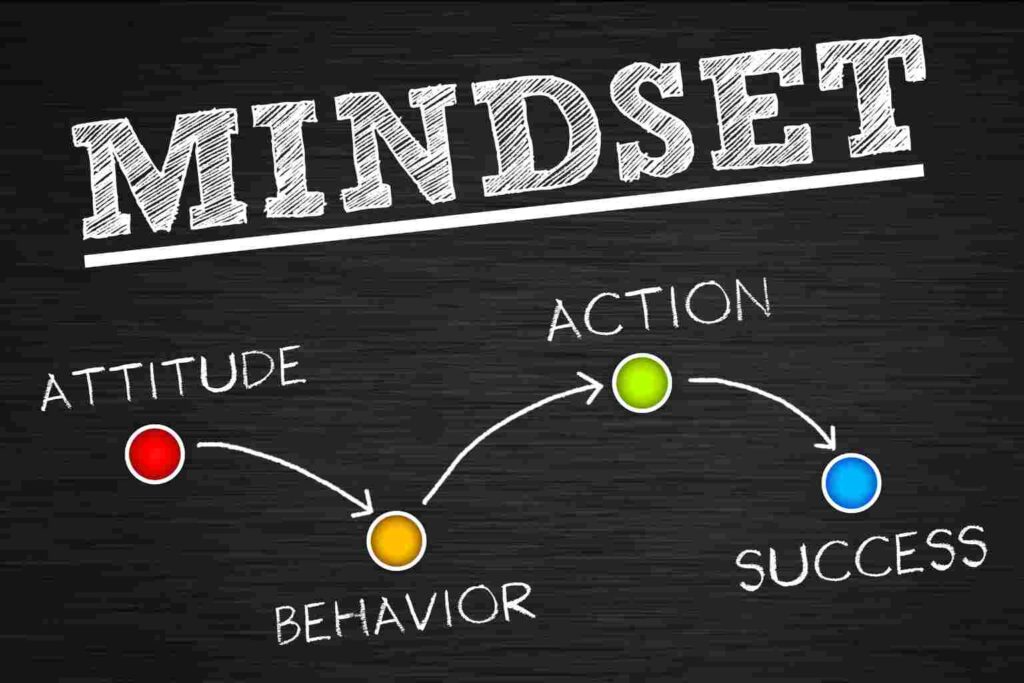
Your internal thinking directly shapes external results.
When you manage your thoughts effectively, your behaviour changes. You apply for roles that once felt out of reach. You communicate with greater clarity during interviews.
Handling rejection also becomes easier. Instead of withdrawing, you review, adjust, and move forward. This approach creates steady improvement over time.
Consider how employers assess candidates. They look for individuals who can manage pressure and stay focused. They value those who continue to act despite uncertainty.
A balanced mindset supports all of this. It helps you prepare better and present yourself more clearly. In turn, your chances of success increase.
Reflect on progress and adjust your approach
Ongoing reflection keeps your development on track.
Progress rarely follows a straight path. Some days feel productive, while others feel more difficult. Both types of days offer useful information.
Set aside time each week to review your actions. Identify what worked well and where you showed control. Then note areas that need further attention.
Avoid harsh judgement during this process. Focus on learning rather than criticism. This approach keeps you engaged and motivated.
If you avoided an opportunity due to doubt, explore why. Then plan a smaller step that feels more manageable next time. This keeps your progress steady and realistic.
Conclusion
Control over your internal voice changes how you approach your career.
Doubt will always appear in some form. That reflects the reality of growth and new challenges. However, you do not need to let it guide your decisions.
Question your thoughts and test them with evidence. Replace harsh judgement with balanced and honest thinking.
Take small actions, even when uncertainty remains. Over time, these choices create a clear shift. You move from hesitation to steady progress. Employers notice that difference, and so will you.
Keep your approach simple, consistent, and grounded in reality. With practice, you will handle pressure with greater control. That change shapes not only your results, but your confidence as well.
You may also find value in reading this article.
Useful resources
- Wire Your Brain for Confidence: The Science of Conquering Self-Doubt by Louisa Jewell.
- Career Confidence: No-BS Stories and Strategies for Finding Your Power by Robynn Storey.
- How to Boost Your Self-Confidence in 30 Days: Simple Daily Habits to Silence Self-Doubt, Speak Up Boldly, and Feel Proud of Who You Are (Personal Mastery Series) by Jordan Blake.
STAY ON TOP OF WHAT IS HAPPENING!
Stay updated by subscribing to our newsletter so that we can notify you of all the latest news, changes to immigration law, available scholarships, and latest jobs, employers employing international candidates and what is happening in Education worldwide?


